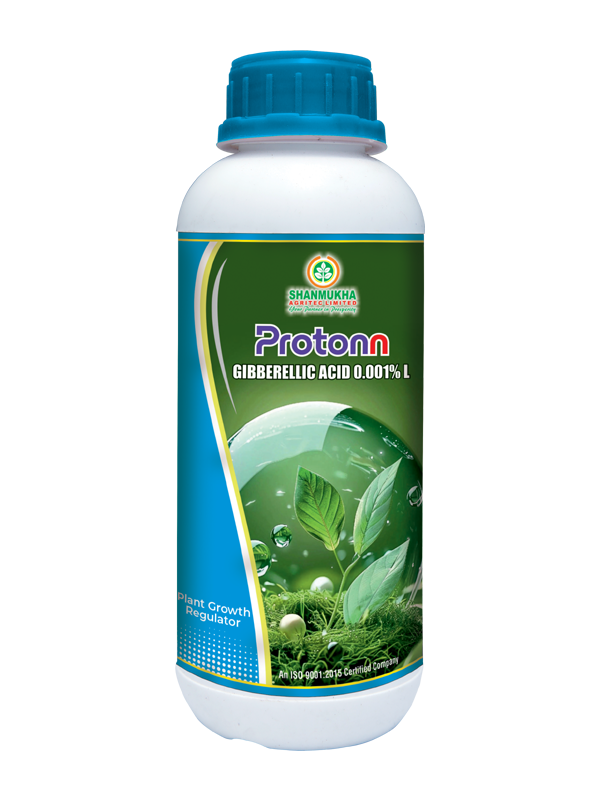
Features
- It enables greater photosynthesis and plant metabolism during the vegetative and reproductive stage.
- It stimulates the production of bigger leaves and a better root system.
- It also plays an important role in the plant growth processes, such as stem elongation, better flowering and grain/fruit formation including grain/fruit maturity.
- It increases the size of the plant, stimulates and increases grain/fruit formation and rate of maturity which boosts crop yield.
- It induces the production of larger bundles and a bigger bunch of grains and helps to get better fruit size.
- It also helps to support plants suffering from nutrient and growth deficiencies.
- It enhances the marketability of your crop and helps to get better returns on investment.
| Crop | Stage of the crop | Dosage/acre (ml) |
|---|---|---|
| Cotton | At the time of boll development | 75 |
| Paddy | At the time of 2-5% of Grain Formation | 75 |
| Tomato | Fruit Formation and Development stage | 75 |
| Brinjal | Initiation of Fruiting and Fruit Develp. stage | 180 |
| Ground nut | Pod Development | 75 |
| Banana | 3rd month, 5th month and at Fruit formation | 115 |
| Grapes | At development of fruit and match head stage | 75 |
| Tea | For unpruned tea – At Bud Break and After Plucking Every Alternate PGR Spray | 108 |
| Tea | For pruned tea – Immediate After Pruning | 108 |
| Okra | Initiation of Fruiting and Fruit Develp. stage | 200 |
| Cabbage & Cauliflower | 55-60 days after Transplantation | 75 |